For many parents in Ghana, the phrase Cambridge Early Years sounds promising, but it can also raise questions. Is it a curriculum? Is it an accreditation? What age is it for? And how can a parent know whether a school is using it in a way that truly benefits young children?
This guide explains Cambridge Early Years in clear language so parents can make informed decisions. It is not a sales pitch. The most important question is not whether a school uses a familiar name, but whether children are safe, cared for, listened to, and supported through age-appropriate learning every day.
What is Cambridge Early Years?
Cambridge Early Years is an international early childhood programme from Cambridge for young learners before formal primary education. It is designed to support the whole child through a balance of communication, early literacy, mathematical thinking, creativity, physical development, social growth, emotional wellbeing, and curiosity about the world.
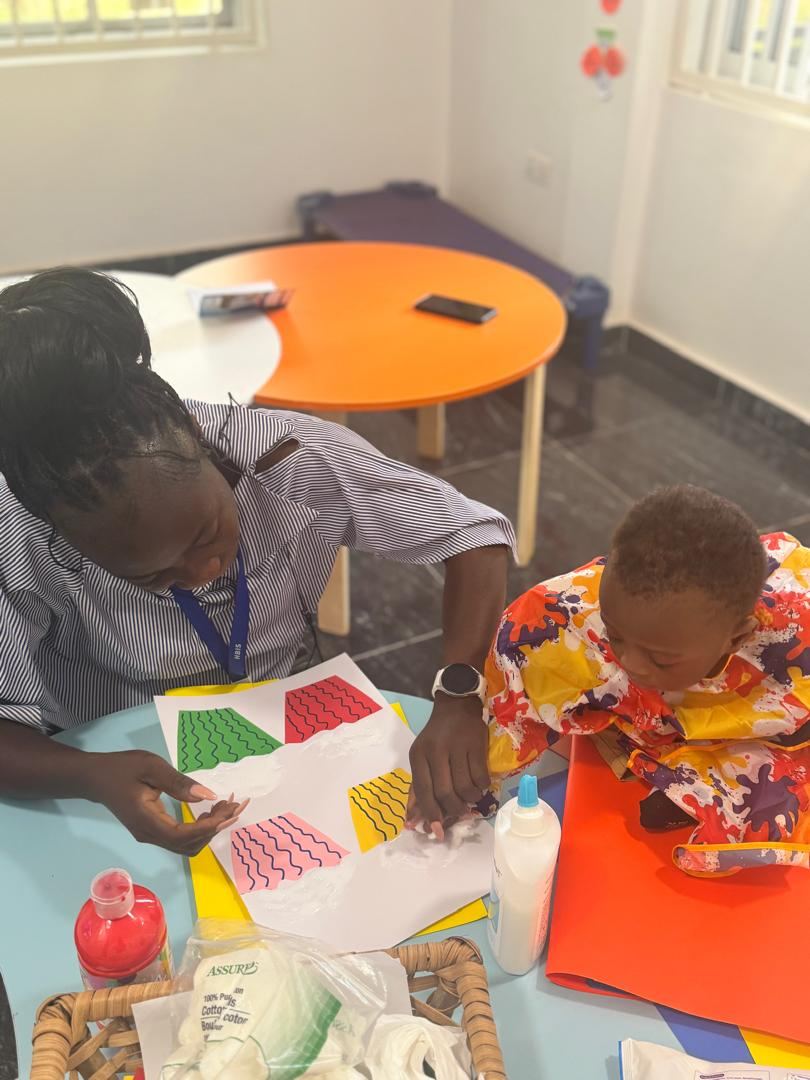
In a strong early years classroom, children do not only sit and copy from a board. They talk, listen, sing, count, sort, build, draw, move, ask questions, listen to stories, practise routines, and learn how to relate kindly with others. Adults guide learning carefully, but the classroom still feels warm and active.
Cambridge Early Years is most meaningful when it is visible in daily classroom practice: how teachers speak to children, how activities are planned, how progress is observed, and how children build confidence over time.
What age range does it cover?
Cambridge Early Years is generally designed for children aged approximately 3 to 6. Schools may organise the stages slightly differently depending on local context, class structure, readiness, and admissions age, but the broad pathway is usually presented as Early Years 1, Early Years 2, and Early Years 3.
Early Years 1
Early Years 1 usually supports younger learners as they settle into more structured school routines. Children build language, social confidence, listening habits, fine motor control, movement, and early independence through guided play and repeated classroom routines.
Early Years 2
Early Years 2 typically introduces more intentional early literacy, number awareness, creative tasks, conversation, story work, and practical discovery. Children are still young, so learning should remain active and supportive rather than pressured.
Early Years 3
Early Years 3 often helps children prepare for the transition into more formal primary learning. Children may practise early reading, writing readiness, mathematical language, problem solving, cooperation, and classroom responsibility while still benefiting from play, movement, and creative expression.
The six Cambridge Early Years curriculum areas
Cambridge Early Years is organised around six broad curriculum areas. Parents do not need to memorise them, but understanding them can help you ask better questions when visiting a school.
Communication, language and literacy
Children build vocabulary, listening, speaking, story understanding, phonological awareness, mark-making, and early reading habits.
Mathematics
Children explore counting, matching, sorting, patterns, shapes, size, comparison, number language, and practical problem solving.
Creative expression
Children use art, music, movement, drama, drawing, making, and imaginative play to express ideas and develop confidence.
Physical development
Children strengthen fine motor and gross motor skills through movement, play, coordination, outdoor activity, and hands-on tasks.
Personal, social and emotional development
Children learn routines, self-control, sharing, kindness, resilience, confidence, and how to build safe relationships with adults and peers.
Understanding the world
Children observe people, places, nature, materials, technology, community life, and simple cause-and-effect relationships.
Why play-based learning matters
Play-based learning is sometimes misunderstood. It does not mean children are left alone without structure. In good early years practice, play is planned, observed, guided, and connected to learning goals. A teacher may set up a sorting activity to build mathematical thinking, a story corner to develop language, or a painting activity to support creativity and fine motor control.
Young children learn through doing. When they move objects, test ideas, talk with adults, listen to stories, sing, repeat routines, and make choices, they build the foundations for later reading, writing, mathematics, confidence, and problem solving.
What Ghanaian parents should consider when choosing an early years school
A curriculum name matters, but the daily environment matters more. When you visit a nursery, kindergarten, preschool, or Cambridge Early Years Centre in Ghana, pay attention to how the school feels and how adults interact with children.
Questions to ask during a school visit
- How does the school help new children settle in?
- What does a typical day look like for this age group?
- How are reading, phonics, early numeracy, creativity, and outdoor play balanced?
- How does the school monitor each child’s development?
- How often do teachers communicate with parents?
- What safety and safeguarding routines are in place?
- How are children supported when they are shy, upset, tired, or still building independence?
- How does the school prepare children for the next stage after Early Years?
Safety and safeguarding
For early years children, safety is not only about gates and buildings. It includes supervision, child-friendly spaces, predictable routines, caring adults, hygiene, arrival and pickup procedures, and how the school responds when a child needs help. Parents should feel comfortable asking direct questions about these routines.
Teacher-child interaction
Watch how teachers speak to children. Are they patient? Do they bend down to listen? Do they encourage children to try again? Do they guide behaviour calmly? A nurturing teacher-child relationship is one of the strongest signs of a healthy early learning environment.
How schools monitor child development
Early years progress is not only measured by worksheets. Schools should observe children across language, movement, social behaviour, confidence, creativity, independence, and early academic readiness. This can include teacher observations, activity records, samples of children’s work, conversations with parents, and gentle developmental check-ins.
Parents should expect clear communication without unnecessary pressure. Young children grow at different rates. A good school notices progress, identifies concerns early, and works with parents in a calm and respectful way.
Transition beyond Early Years
One aim of early years education is to prepare children for the next stage without rushing childhood. By the time children move into Lower Primary, they should be developing stronger listening habits, early reading and writing readiness, number confidence, independence, social skills, and the ability to participate in classroom routines.
Parents can support this transition at home by reading regularly, talking with children about their day, encouraging simple responsibilities, and keeping communication open with the school.
How parents can verify Cambridge status
If a school describes itself as a Cambridge Early Years Centre, parents can politely ask what exactly is registered, what age group or programme it applies to, and whether the school can show evidence of its current status. Parents should also check that the school’s public communication is precise and not overstated.
Be cautious of broad claims that sound impressive but are unclear. For example, registration as an Early Years Centre should not automatically be interpreted as Cambridge certification for every programme in the school.
HoneyBerry’s Cambridge Early Years position
HoneyBerry International School is registered as a Cambridge Early Years Centre. The registration reference shown in HoneyBerry’s current website materials is Registered School GH119, with the certificate section noting an issue date of 26 January 2026.
This means HoneyBerry presents its early years learning with Cambridge Early Years recognition while continuing to focus on what matters most to young children: safety, nurturing care, teacher support, confidence, creativity, communication, and steady foundational growth.
This article does not claim that every HoneyBerry programme is a Cambridge programme. Parents are encouraged to ask the school directly about the current scope of registration and how Cambridge Early Years is implemented in daily classroom practice.
Interested in Early Years at HoneyBerry?
If you are comparing nursery, kindergarten, preschool, or Cambridge Early Years options in Kumasi, the best next step is to visit the school, ask questions, and observe whether the environment feels safe, caring, and developmentally appropriate for your child.
Visit, ask questions, and see the learning environment.
HoneyBerry welcomes parent enquiries about Crèche, Nursery, Kindergarten, Cambridge Early Years, and Lower Primary learning in Sokoban, Kumasi.